
Electric bicycle applications
Electric assistance for leisure cycling
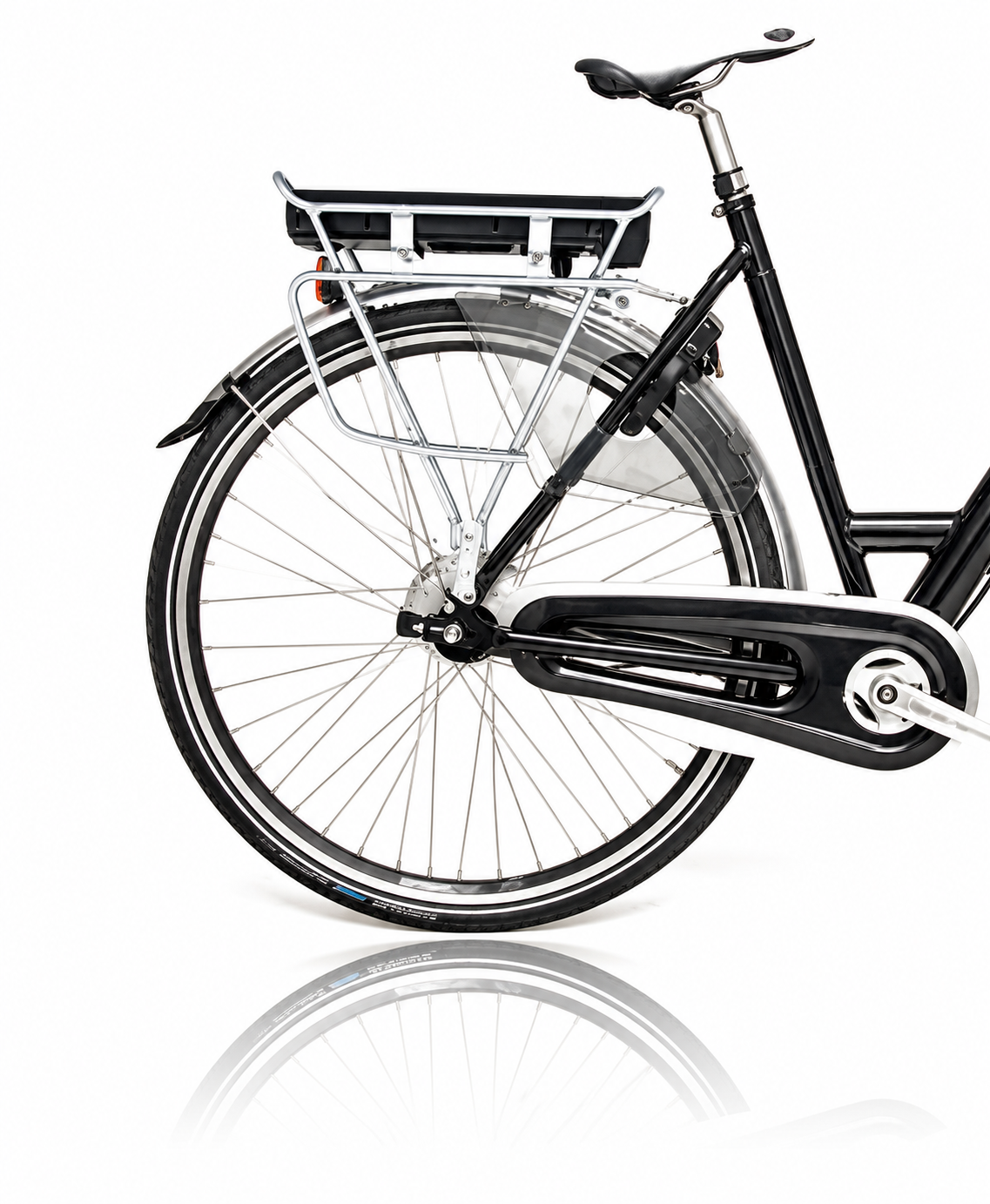
Electric assistance makes a relaxed day out easier, including the ride home into a headwind.
V-fiets offers quiet, compact and lightweight drives for leisure bicycles. Range depends on the setup and riding conditions.
Pedal assistance for sport cycling
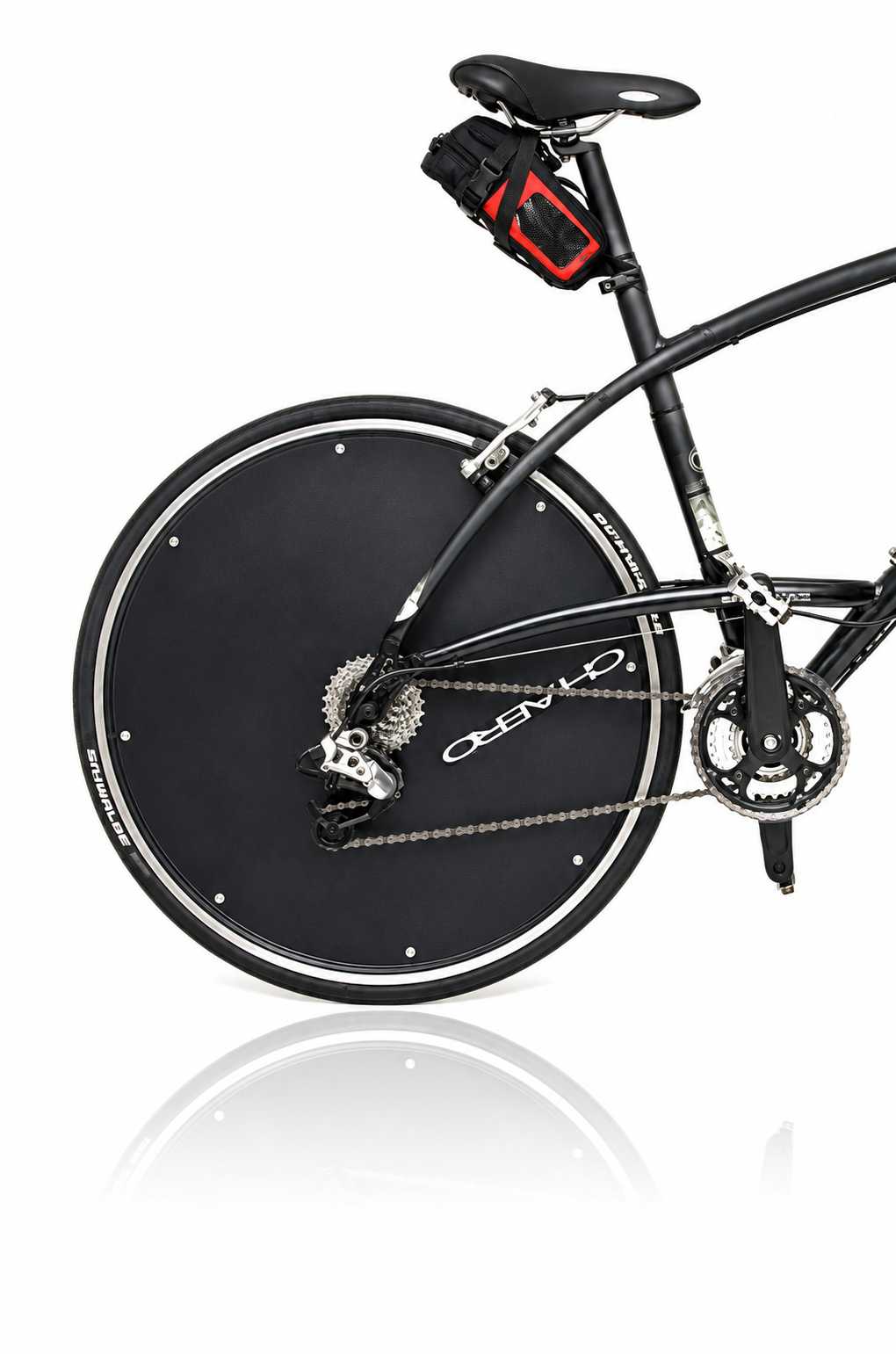
Sport riders can benefit from pedal assistance even when their riding speed often exceeds 25 km/h.
Light frames, low-rolling-resistance tyres and compact batteries can be combined with low-drag motors. In the example described here, the motor adds about 1.5 kg and the complete drive about 4 kg. The V-Core can be adjusted for a cadence of around 80 rpm.
Electric assistance for adapted cycles
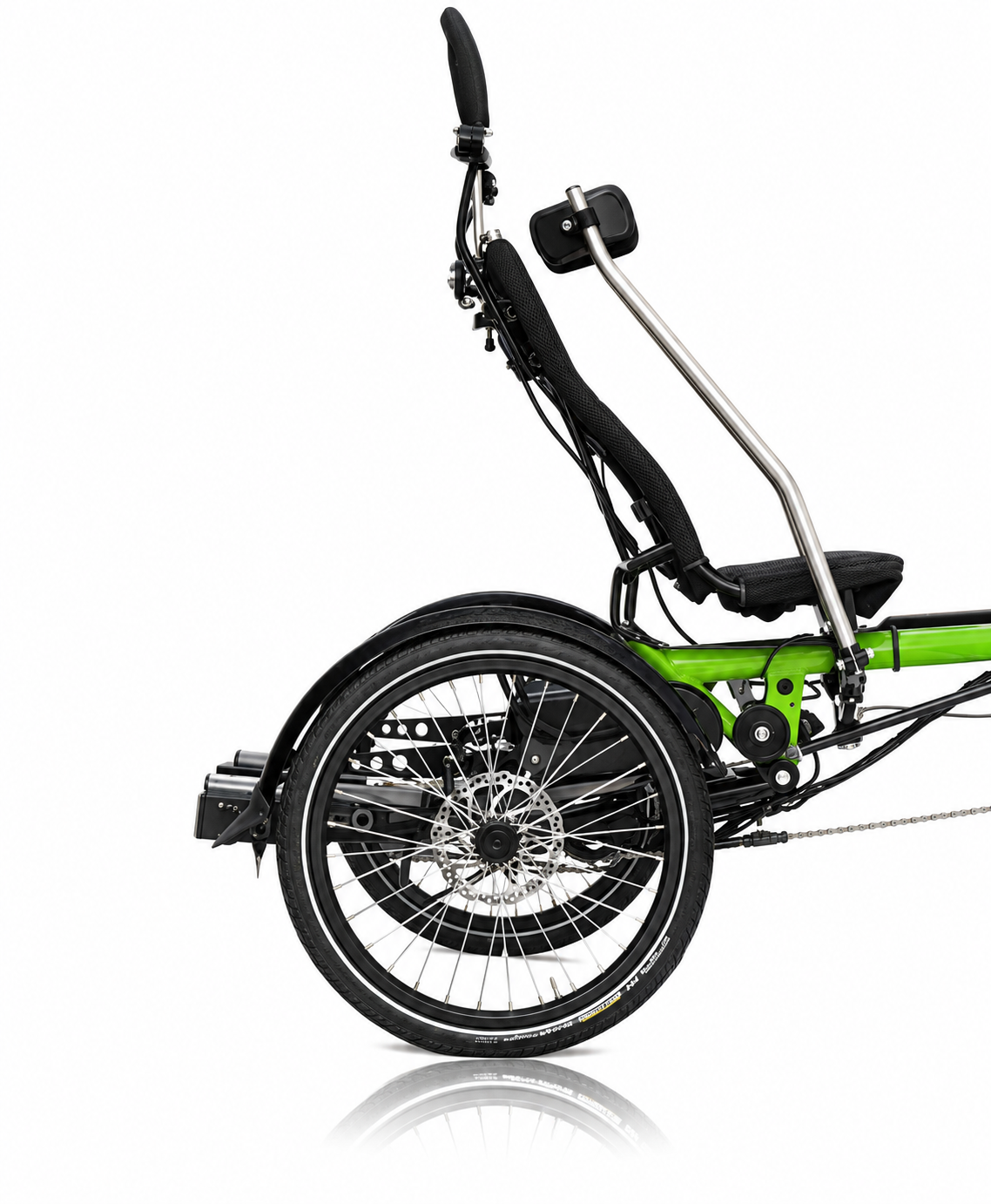
Electric assistance can make independent cycling possible for riders who would otherwise need help getting around.
We tune components to the rider’s needs, providing stronger assistance when needed and smoother support at other times.
A child’s adapted cycle is one example. A setup that can be adjusted as the child grows can extend the useful life of the bicycle.
Electric drives for distinctive bicycles
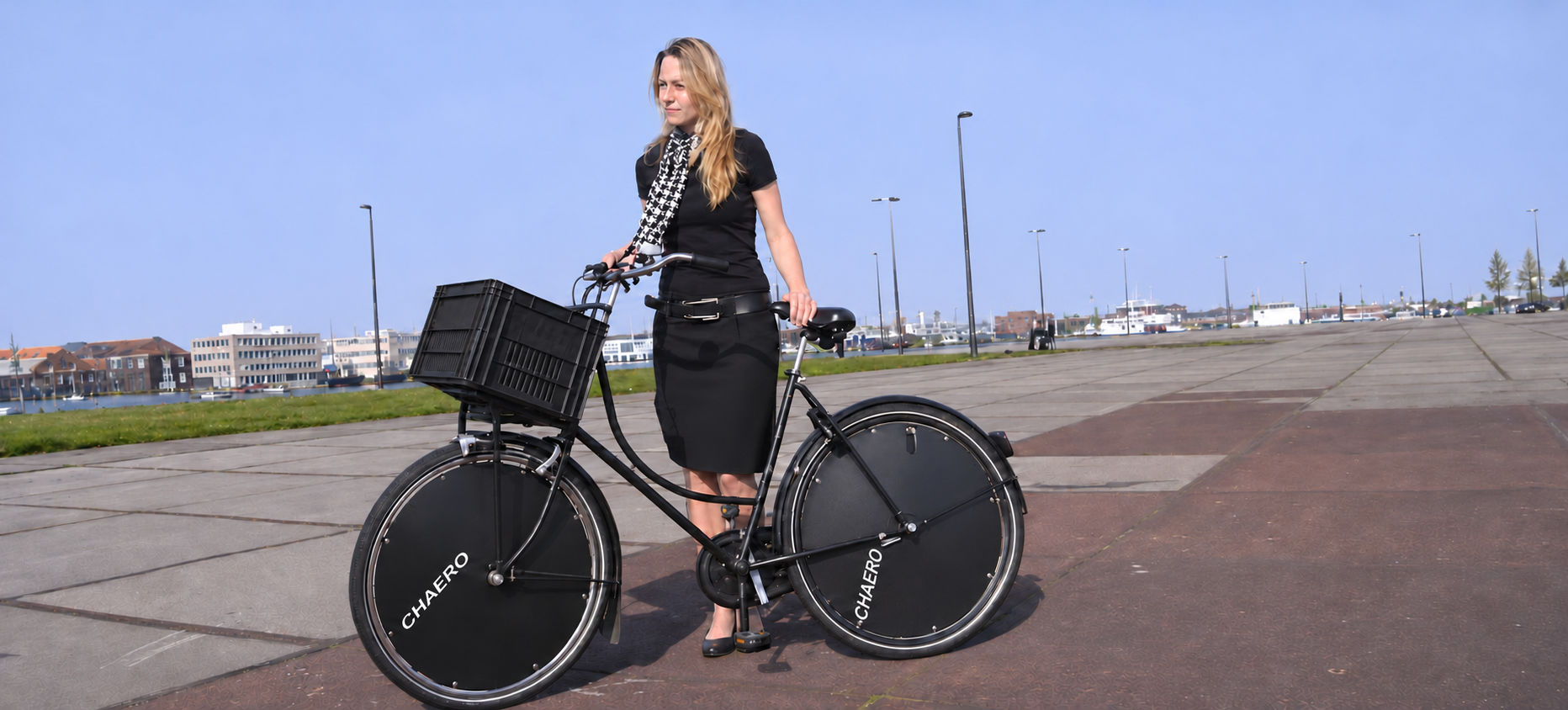
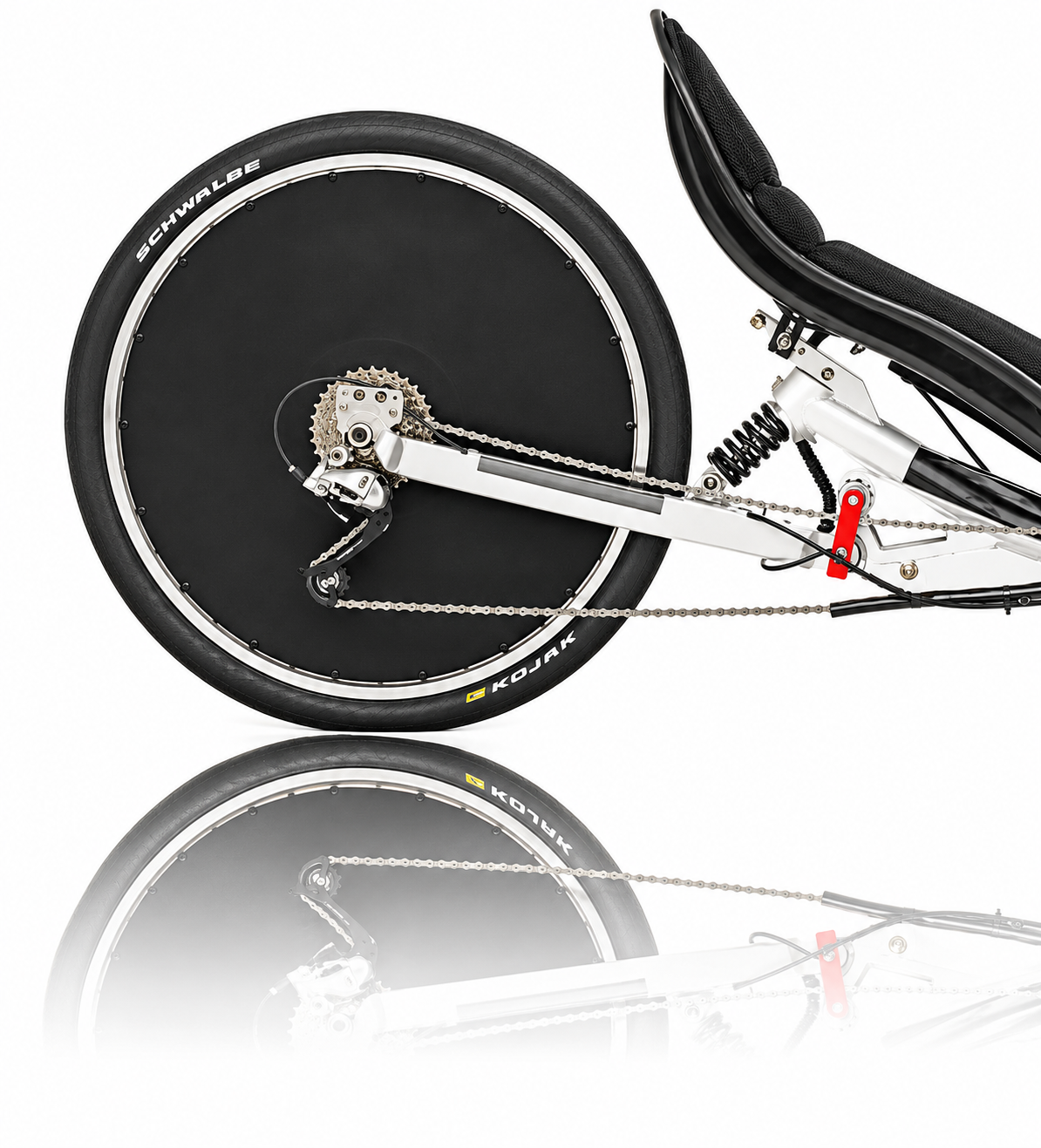
The drive can be integrated discreetly, with concealed cables and components that suit the bicycle’s appearance.
We balance wheel geometry and design with ease of use and component reliability.
Electric assistance for cargo and passenger cycles
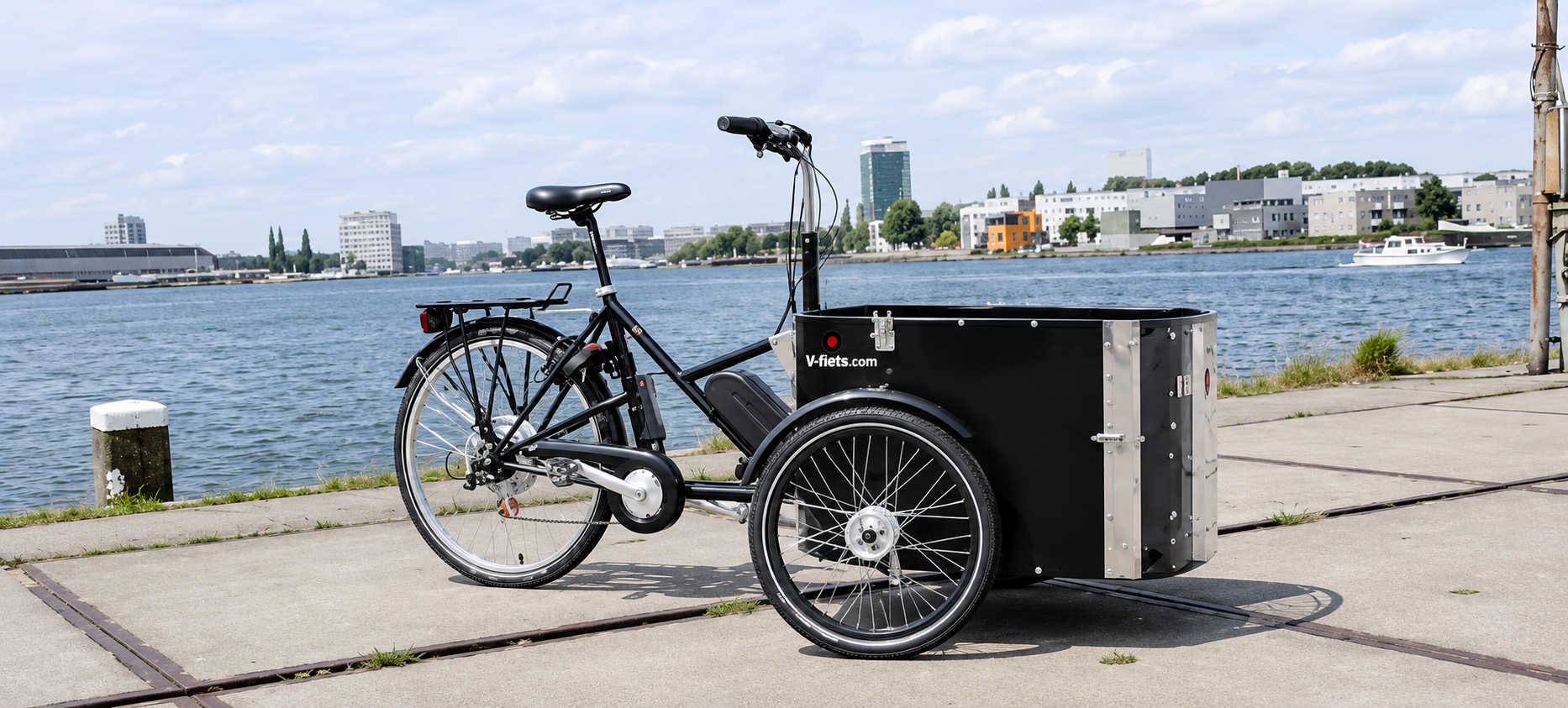
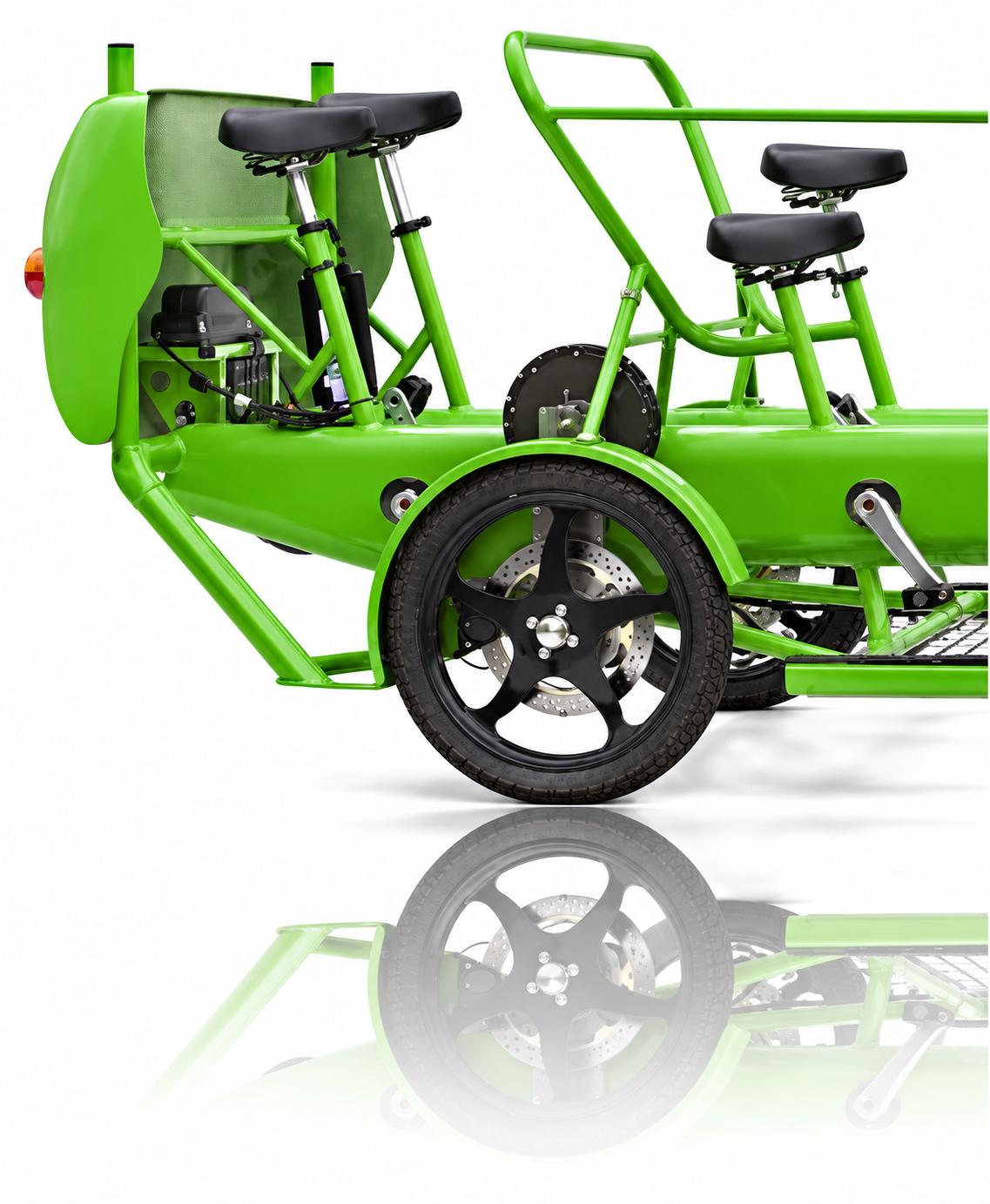
The first V-fiets electric conversion in 2007 was a cargo bike. Developments since then have made drivetrains for much heavier cycles possible, including specialist applications over 600 kg.
Applications include mobile coffee and ice cream installations, family transport and cycles for carrying children. Different loads call for different drive configurations.
V-fiets hardware and software allow different motors to be matched to the application; on suitable systems, a later motor upgrade can be integrated and tuned.
Electric bicycle drive prototypes
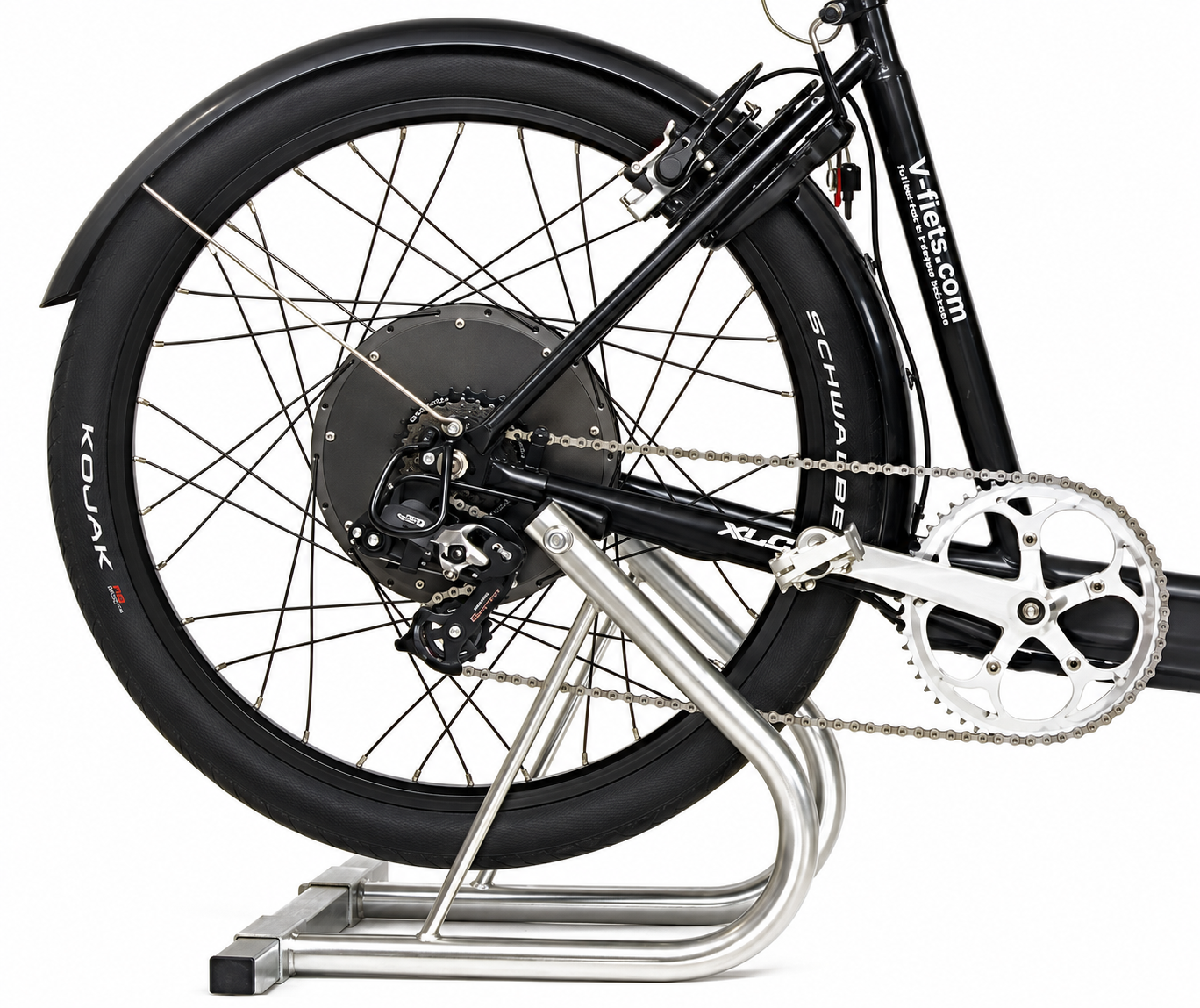
V-fiets develops and tests its own electric drives.
We test motor and battery components against demanding mechanical and electrical loads.
A 2006 endurance prototype reached 54 km/h with a peak battery output of 1.1 kW. It covered over 2,500 km at a cruising speed of 42 km/h before we dismantled it to inspect wear. That prototype, Black Widow, inspired the V-fiets logo in 2007.
A three-wheel F1 cargo prototype could switch between front, rear and all-wheel drive while moving. Maximum combined motor torque was 105 Nm (65 + 20 + 20 Nm).
Development of the Oma-GT began in 2013. Its calculated top speed was 93.8 km/h. Initial mechanical tests were completed in 2014 for indoor track use.
These are historical prototype figures. The standard V-fiets products described here use a nominal 250 W rating and assistance limited to 25 km/h.